01
Inspection first
Roof void, walls and subfloor checked to find how rodents are getting in.

Rats in Walls Removal in Melbourne is the job of getting rodents out of your wall cavities, sealing the gaps they used, and cleaning up what they left behind. If you're hearing scratching behind the plaster at 2am, you need wall cavity rat extermination in Melbourne before the chewing reaches your wiring. We handle it same-day.
Roof void, walls and subfloor checked to find how rodents are getting in.
You see what we found and the plan before any work starts.
Gaps proofed with steel mesh and sealant, not just bait.
Lockable, tamper-resistant stations placed with kids and pets in mind.
Rats in Walls Removal in Melbourne is a targeted pest control service that locates rodents living inside wall cavities, removes them, seals their entry points, and sanitises the space. We use inspection mirrors, thermal imaging cameras and tracking powder to map exactly where rats are moving before we place a single snap trap or bait station. It is not guesswork. Every cavity has a route in and a route out, and we find both.
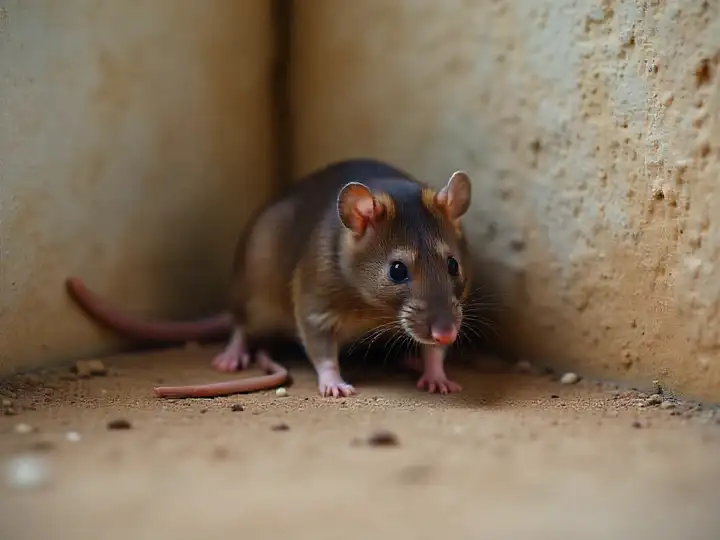
Melbourne's older housing stock is the problem. Weatherboard homes in Hawthorn and solid-brick terraces in South Yarra have wall cavities that run floor to ceiling, giving rats a warm highway between rooms. Once winter rain pushes them in, a single pair can turn into a colony inside six weeks. If you search for wall rat removal near me Melbourne and want it sorted properly, we handle the removal, the proofing and the mess.
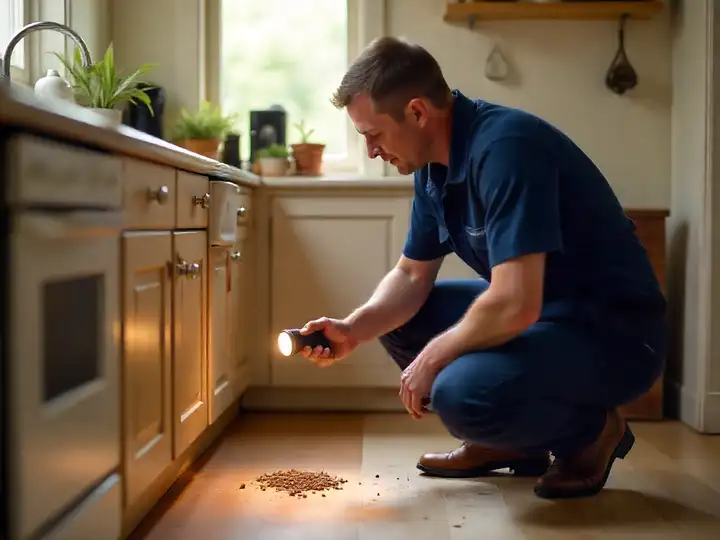
We ask where you're hearing the noise, when it's loudest, and whether you've seen droppings. That tells us whether it's rats in walls or rats in roof, and how many technicians to send. Most Melbourne jobs are booked same-day or next morning.
Our licensed technician inspects the wall cavities using inspection mirrors and a thermal imaging camera to find nesting sites and movement paths. We check the roof void, subfloor, and every external gap. This takes 45 to 90 minutes on a typical home.
We place snap traps, live catch traps and bait stations at the points rats are actually using. Rodenticide bait blocks go into lockable stations so pets and kids can't reach them. We check and reset traps until the cavity is clear.
Once the rats are gone, we seal every entry point with steel wool, copper mesh, wire mesh and cement mortar. We work down to a 12mm gap, because anything wider is an open door. This is the step that stops the problem coming back.
We remove droppings, contaminated material and any dead rats, then disinfect the cavity. You get a written summary of what we found, what we sealed and what to watch for. A follow-up check is included if activity continues.
Detects body heat inside wall cavities so we can pinpoint nesting sites and movement paths without cutting into plaster.
Lets us see inside cavities through small access points, so we can confirm activity and locate entry points without major demolition.
Placed at the exact points rats are moving. Snap traps for quick removal, live catch traps where a non-lethal option is preferred.
Tamper-resistant stations that hold rodenticide bait blocks securely, so pets and children can't reach them.
Packed into gaps to block entry points. Rats can't chew through either material, unlike expanding foam on its own.
Used to seal larger gaps around pipes, cables and eaves after the steel wool and copper mesh are in place.
Applied at suspected entry points to confirm rat movement and identify the exact routes they're using.
We follow IPM certification principles: identify the species, remove the activity, exclude the entry points, then monitor. This approach targets the cause, not just the symptom, so the problem doesn't return.
Every rodenticide we use is APVMA approved and applied strictly according to label directions. Bait blocks go inside lockable stations, never loose in the cavity where pets or kids could reach them.
Wall cavity work involves confined spaces, ladders and chemical handling. We follow WHS compliance on every job, including PPE, safe access and correct chemical storage and disposal.
A young rat can squeeze through a 12mm gap. We seal every entry point down to that size using steel wool, copper mesh, wire mesh and cement mortar, so there's nothing left to squeeze through.
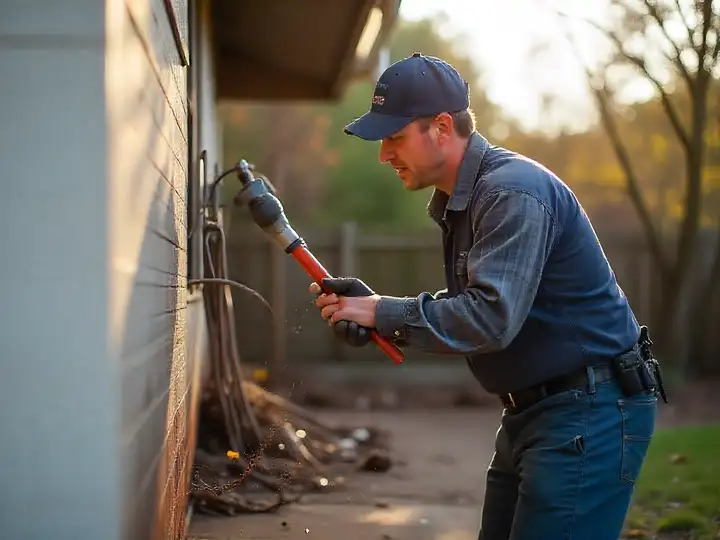
We inspect the cavity with thermal imaging, identify how many rats are present and where they're entering, then set traps and bait stations at those points. The noise stops within days, and the entry points are sealed so nothing moves back in.
We trace the route from the wall cavity to the kitchen, remove the rats, seal the gaps, and clean up the droppings with APVMA approved disinfectant. The contamination risk is cleared and the rats have no path back into your living space.
We use a thermal imaging camera to locate the carcass inside the cavity, remove it through a minimal access point, and treat the area to eliminate the smell. The smell is gone within a day, and we check the cavity for other activity while we're in there.
We inspect the original entry points, remove the new activity, and proof every gap down to 12mm using steel wool, copper mesh and cement mortar. The cavity stays empty because the entry points are properly sealed, not just baited.
A family in Hawthorn had been hearing scratching in the bedroom wall for three weeks. Droppings were found in the kitchen. Inspection found a 20mm gap under the eaves where rats were entering, plus chewed wiring insulation inside the cavity.
We removed four rats over eight days using snap traps and bait stations, sealed the eave gap with copper mesh and mortar, and cleaned out the droppings. The scratching stopped within 48 hours and hasn't returned.
Maintenance: We recommended checking the eave line each autumn before the wet season, and keeping the garden clear of debris against the house.
A South Yarra terrace had a strong dead rat smell in the hallway that had been building for five days. The source couldn't be found by the homeowner. We used thermal imaging to locate the carcass inside a shared wall cavity between the hallway and the neighbouring property.
The carcass was removed through a small access point, the cavity was treated with APVMA approved disinfectant, and the smell was gone within 24 hours. We also sealed two entry points found during the inspection.
Maintenance: We advised the homeowner to check the subfloor vents quarterly, since that was the likely entry route.
A Kew homeowner had rats removed by another company six months earlier, but they had returned through the same gaps. Inspection found the original proofing had used expanding foam only, which rats had chewed straight through.
We removed the new activity, then re-proofed every entry point using steel wool and copper mesh packed behind cement mortar. Fourteen gaps were sealed down to 12mm. No activity has been recorded since.
Maintenance: We recommended an annual inspection before winter, and a follow-up check three months after proofing to confirm the seals were holding.
Emergency or after-hours callouts add a premium. Proofing and droppings cleanup are quoted separately if the entry points are extensive. You get a fixed price before we start.
Rats enter through gaps as small as 12mm, usually where pipes and cables penetrate the exterior wall, under eaves, or through broken roof tiles. Melbourne's older weatherboard and brick veneer homes have plenty of these. Once inside, they travel the full height of the cavity between rooms.
Yes, when it's done by a licensed technician using APVMA approved products. We use lockable bait stations so pets and children can't reach the rodenticide, and we follow WHS compliance for confined space work. Traps are placed where they won't be touched. We'll walk you through the setup before we leave.
The initial inspection and setup takes two to four hours on a typical home. Trapping and monitoring usually runs seven to fourteen days, depending on how many rats are present. Proofing and cleanup add another two to three hours. You'll know the full timeline before we begin.
Not seeing your question? Our local team can help you understand urgency, scheduling and what to expect.
Ask the local team
General rat removal covers the whole property, not just the walls. If rats are also in the roof or subfloor, we treat it as one job so nothing gets missed between the cavities.
View service
Mice often move in alongside rats, using the same gaps and leaving droppings in the kitchen. We check for mice during every wall cavity job and treat both if needed.
View service
Rats in walls usually start in the roof. If we find activity in the ceiling void, we treat both areas together so the colony has nowhere left to run.
View service
Lockable bait stations are placed inside the cavity and along external walls. They're tamper-resistant, so pets and kids can't reach the rodenticide bait blocks inside.
View service
Send us the form and we will book you in, usually the same day for urgent rodent work.
Tell us what you are hearing or seeing and we will give you a straight answer on what the job involves and what it will cost. No obligation, no pressure.